
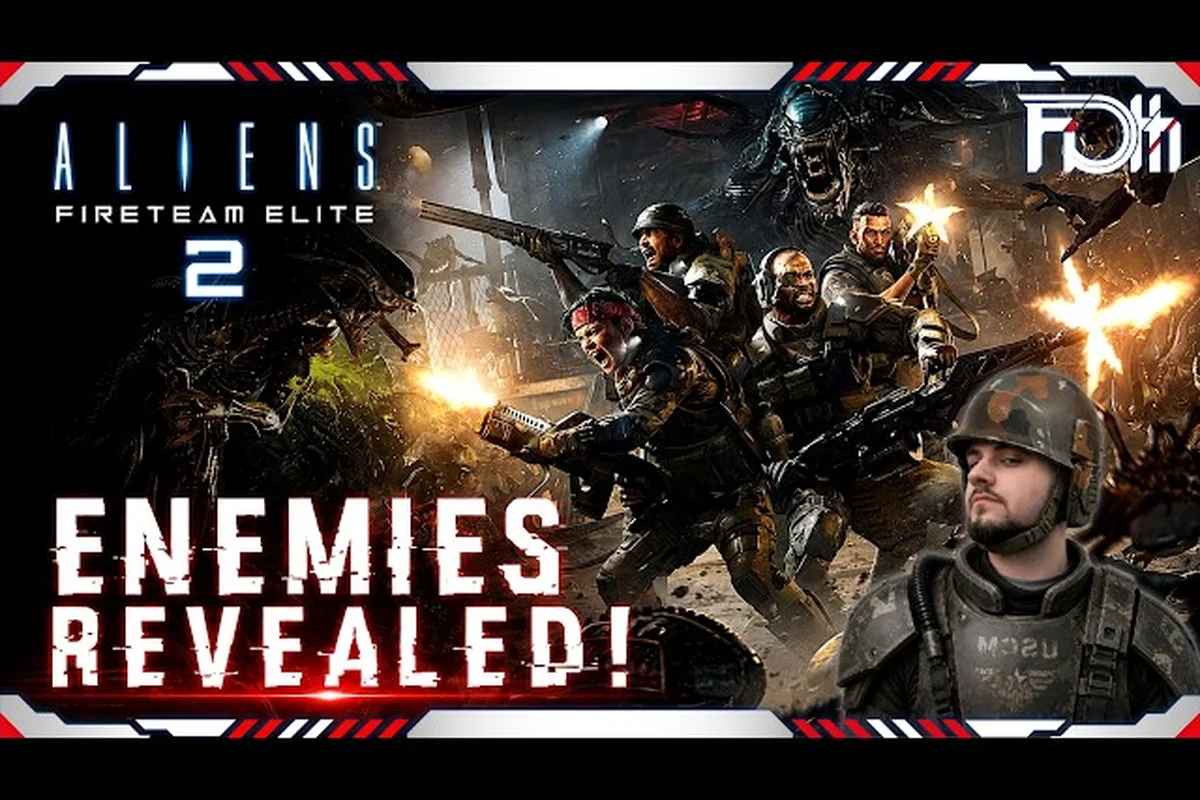
The Xenomorph hive in Aliens Fireteam Elite 2 isn't just bigger — it's smarter. Cold Iron Studios has overhauled the enemy director so that every Drone, Prowler, and Crusher reacts to your fireteam's positioning, ammo reserves, and even your class composition, which means the old "stand and shoot" tactics from the first game will get you torn apart. Understanding how this new enemy AI thinks is the single biggest survival multiplier you can carry into the LV-558 colony, because every engagement now rewards players who read threat levels and exploit weak points instead of just spraying pulse rifle fire down a corridor.
Get the latest tactical breakdown of aliens fireteam elite 2 enemy ai explained in plain English, including exact attack patterns, threat level priorities, and the weak point guide that turns bullet sponges into one-magazine kills. This is the intel that separates a four-man fireteam from a four-man body bag.
How the New Enemy Director Rewrites Fireteam Tactics
The heart of the AI overhaul is a dynamic threat evaluation system that constantly reranks your squad, and it's the reason why aliens fireteam elite 2 enemy ai explained has become the most-discussed topic in the community since the August 25, 2026 launch. According to PC Gamer's preview coverage, director Chris Cross emphasized that the team quadrupled both asset counts and enemy density while making the AI "smarter, more aggressive and more responsive to player tactics" — and that responsiveness is what you'll feel in every firefight.
The director now tracks several hidden variables that determine which marine gets swarmed, including proximity to the group, recent damage taken, and the number of active threats nearby. This system ensures that no single player is consistently targeted, keeping pressure distributed across the fireteam and rewarding coordinated positioning during intense firefights.
-
Damage dealt: The marine topping the DPS chart draws more aggro, so your Gunner needs to expect company.
-
Distance to target: The closest marine is prioritized for melee lunges unless another player breaks line of sight.
-
Health state: Injured marines are targeted more aggressively, since the AI "smells blood" and presses the advantage.
-
Class abilities: Using a Demolisher's blast or a Doc's healing station shifts aggro, because the AI treats support actions as high-value targets.
-
Ammo conservation: The AI appears to pressure players who reload frequently, punishing poor trigger discipline.
The practical takeaway is that enemy threat levels are no longer static. A Drone that ignores your Medic at full health will peel off and sprint toward that same Medic the moment their shields drop below 30 percent, which means your support players need to stay behind cover even during "safe" lulls in combat.
Threat level also scales with mission difficulty — on Standard, the director gives you roughly three seconds of reaction time when a Prowler locks on, but on Intense that window shrinks to under two seconds, and on Extreme the AI will actively fake out lunges to bait your dodge roll.
The Role of the "Hive Mind" Director
The Hive Mind director is a separate AI layer that controls wave composition, and it learns from your performance in real time. If your fireteam melts a wave of Runners with flame turrets, the director will spawn more Spitters in the next wave to force you out of that defensive position, and if you're sniping Drones from range, it'll send a squad of Prowlers to close the gap.
This adaptive behavior means that aliens fireteam elite 2 enemy attack patterns can shift mid-mission, and players who memorize a single spawn sequence will be caught off guard when the director throws a curveball. Community testing suggests the director has a "patience meter" that fills when you camp in one spot, and once it maxes out, the game spawns a Crusher to break your position — so keep moving, even when you think you've found the perfect chokepoint.
| Director Trigger | Response Behavior | Counter-Strategy |
|---|---|---|
| Camping in one chokepoint | Spawns Crusher or Bulwark to break cover | Rotate positions every 30-45 seconds |
| Heavy flame/incendiary usage | Spawns Spitters to force repositioning | Keep a sniper or Hunter on Spitter duty |
| Sniping from long range | Spawns Prowlers for flanking routes | Use motion trackers to watch side passages |
| Rapid reload spam | Spawns Runners to pressure reload windows | Swap to sidearm instead of panic reloading |
| Kill streak without taking damage | Spawns Warden to lock down the area | Prioritize Warden with Focus Fire team perk |
Reading Enemy Attack Patterns Before They Strike
Every Xenomorph in Aliens Fireteam Elite 2 telegraphs its attacks with a distinct animation wind-up, and learning to read these tells is the foundation of the aliens fireteam elite 2 weak point guide that veteran marines swear by. The key insight is that the AI commits to an attack roughly 0.4 to 0.8 seconds before the hit lands, which gives you a narrow but exploitable window to dodge, parry, or break line of sight.
The Drone — the most common enemy — has three distinct attack patterns: a quick claw swipe, a leaping pounce, and a grapple attempt. The claw swipe is telegraphed by a shoulder dip, the pounce by a crouch-and-coil motion, and the grapple by a raised tail. Each of these can be dodged with the right timing, but the AI will mix them up based on your distance, so a Drone that's closing distance will favor the pounce while one that's already in melee range will chain claw swipes.
Prowlers are faster and more erratic, with a lunging bite attack that covers surprising distance. The tell here is a three-step stutter before the lunge, and if you see that stutter while a Prowler is at mid-range, you have about half a second to sidestep. What makes Prowlers dangerous is their flanking behavior — the AI will often send two Prowlers on opposite sides of your fireteam while a Drone group pushes the front, forcing you to split your attention.
Crusher Attack Patterns and Dodge Windows
The Crusher is the heaviest standard enemy, and learning aliens fireteam elite 2 how to dodge crusher is essential for any serious run. The Crusher has four telegraphed attacks: a ground slam that creates a shockwave, a charging tackle, a sweeping claw swipe, and a grab that pins a marine. Each attack has a distinct wind-up animation, allowing skilled players to time their dodges or use cover effectively.
-
Ground Slam: Both arms raise overhead, then slam down in a shockwave that covers a 5-meter radius. Dodge by rolling toward the Crusher's feet just as the arms start descending — rolling away will still catch the shockwave edge.
-
Charge: The Crusher lowers its head and charges in a straight line. The tell is a deep inhale sound and a head dip. Sidestep perpendicular to the charge path, then punish the recovery animation.
-
Sweep Claw: A horizontal claw swipe covering a 180-degree arc in front of the Crusher. Crouch or roll under the swipe — the hitbox is above crouch height.
-
Grapple Slam: If a marine is too close for too long, the Crusher grabs them and slams them into the ground. This is the only attack you can't dodge — you need a teammate to shoot the Crusher's glowing chest core to break the grapple.
The critical weakness of the Crusher is its exposed chest core, which becomes visible after it takes sustained damage to the head. Once the core is exposed, focus fire on it for massive damage — a coordinated four-man team can drop a Crusher in under five seconds if they hit the core with precision weapons.
Exploder and Spitter Ranged Threats
Exploders are the classic suicide bombers, but the new AI has made them far more dangerous by giving them a delayed detonation mechanic. When an Exploder reaches its target, it doesn't immediately explode — instead, it begins a 2-second charge-up with a rising pitch whine. If you shoot the glowing sac during this window, you can detonate it safely at range, but if you wait too long, the blast radius covers a massive area.
Spitters now use a three-shot burst instead of a single acid glob, and the AI will lead its targets, so standing still while a Spitter fires guarantees you eat all three globs. The counter is to strafe continuously and break line of sight between bursts — the Spitter has a noticeable reload pause after each third shot.
| Enemy | Primary Attack Pattern | Weak Point | Dodge/Interrupt Window |
|---|---|---|---|
| Drone | Claw swipe / pounce / grapple | Head (x2 damage) | 0.5s after shoulder dip |
| Prowler | Stutter-step lunge bite | Back spines | 0.4s after third stutter step |
| Crusher | Ground slam / charge / sweep | Exposed chest core | Roll toward feet on slam |
| Exploder | Delayed detonation | Glowing sac | Shoot sac during 2s charge-up |
| Spitter | Three-shot acid burst | Head (x1.5 damage) | Reload pause after 3rd shot |
Weak Point Guide: Where to Shoot Every Threat
The aliens fireteam elite 2 weak point guide is more nuanced than the original game, because the new AI actively protects its weak points. When a Xenomorph takes damage to its weak point, it will often flinch and reposition to shield that area — a Drone will tuck its head down, a Crusher will turn its chest away, and a Prowler will present its armored back to you.
This means you need to break the guard before you can exploit the weak point consistently. Staggering an enemy with a heavy weapon or a grenade will cause it to expose its weak point for 2-3 seconds, which is your window to dump damage. The Demolisher's concussive grenades are particularly effective for this, since they stagger even Crushers on Standard difficulty.
Headshots and Precision Damage
Most Xenomorphs take double damage from headshots, but the hitbox is smaller than in the original game, and the AI will actively bob its head to avoid precision fire. The Hunter class is built around this — their Weak Point Scanner ability highlights the exact hitbox and applies a damage multiplier, making them the best class for taking down high-value targets.
For the Synthetic Android enemies, the weak point is the optical sensor cluster on the faceplate, and hitting it causes a chain reaction that can stun nearby androids. This makes the aliens fireteam elite 2 synthetic android guide essential for missions where the AI sends waves of combat androids — their armor is too thick for body shots, but the sensor cluster is a one-shot stagger.
| Weak Point | Damage Multiplier | Enemy Type | Best Weapon |
|---|---|---|---|
| Head (Drone/Prowler) | x2.0 | Biological | Precision rifles, pistols |
| Chest core (Crusher) | x3.0 after exposure | Biological | Heavy weapons, shotguns |
| Acid sac (Exploder) | Instant detonation | Biological | Any ranged weapon |
| Sensor cluster (Android) | x2.5 + chain stun | Synthetic | SMGs, assault rifles |
| Leg joints (Bulwark) | x1.5 + movement slow | Biological | DMRs, marksman rifles |
Enemy Threat Levels and Prioritization Framework
Understanding aliens fireteam elite 2 enemy threat levels is about knowing which enemy to kill first, and the new AI director makes this harder by mixing threat types in ways that force hard choices. A wave with two Prowlers flanking, a Spitter providing ranged support, and a Crusher pushing the front is a classic example — you can't kill everything at once, so you need to prioritize based on your fireteam composition.
The community's consensus threat ranking, based on hundreds of documented runs, prioritizes Spitters first in most situations because their acid globs can melt through even the toughest marine's shields in two volleys. Next are Prowlers because their speed makes them hardest to dodge in confined spaces, followed by Exploders — they're dangerous but have a clear counter-play window.
Crushers rank lower in priority not because they're weak, but because they're slow and their attacks are heavily telegraphed. A skilled fireteam can keep a Crusher alive while clearing the rest of the wave, then focus it down once the field is clean. However, if a Crusher reaches your position, it becomes the top priority immediately, because its grapple slam can instantly down a marine.
Class-Based Threat Response
Different classes should handle different threats, and the aliens fireteam elite 2 enemy ai explained framework extends to your fireteam's tactical roles. For example, the Demolisher excels at clearing swarms with explosive area damage, while the Doc focuses on healing and debuffing tougher enemies. The Technician’s turrets can draw aggro from the director, and the Gunner’s overclock ability boosts damage output against priority targets, making class synergy vital for survival.
-
Gunner: Primary DPS on Crushers and Bulwarks, using the Focus Fire ability to mark a single target for the whole team.
-
Demolisher: Crowd control on Runners and Drone swarms, with grenades to stagger high-value targets.
-
Doc: Keeps the team alive during sustained pressure, but also carries a suppression weapon to slow Prowlers.
-
Hunter: Snipes Spitters and Exploders from range, using the Weak Point Scanner to call out priority targets.
-
Marauder: Flanks and handles Prowlers with melee finishers, which have a stun chance on the back spines.
-
Specialist: Flexible role that adapts to the wave composition, swapping between DPS and support as needed.
For a deeper dive on the individual special enemies and their unique mechanics, check out our Siren and Warden enemy breakdown which covers the elite variants you'll face on higher difficulties. The Siren uses sonic attacks that disrupt marine abilities, while the Warden deploys protective shields and summons reinforcements. Understanding their attack patterns and weaknesses is crucial for tackling intense missions on Extreme or Insane difficulty settings.
Advanced AI Exploitation: Turning the Director's Tricks Against It
Once you understand how the AI director works, you can start manipulating it to make missions easier. The director's adaptive behavior is predictable in its responsiveness — it reacts to what you did, not what you're about to do, which creates exploitable windows.
Bait-and-switch positioning is the most powerful technique. Have one marine stand in an exposed position to draw the director's aggro, while the other three set up in a kill box. When the director commits a wave to attack the bait, the other three marines can shred the enemies from behind, and the AI won't adapt until the wave is already dead.
Ammo management is another lever. The director tracks reload frequency, and if you deliberately use single-fire weapons or conserve ammo, the AI will spawn fewer Runners (which are designed to pressure reloads). This is a subtle but real effect that community testing has verified across multiple patches.
Fake retreats work surprisingly well. If you pull back through a doorway, the director will often commit enemies to chase you, and you can set up a crossfire at the chokepoint. The AI's line-of-sight tracking means it won't "see" marines positioned perpendicular to the doorway, so you can catch the chasing swarm in a perfect ambush.
For a complete list of every enemy type in the game, including the elite variants and their spawn conditions, reference our full enemy list and kill guide. And if you're struggling with the elite Warden or Harbinger specifically, the Warden and Harbinger beat guide has the exact mechanics and loadout recommendations.
Frequently Asked Questions
How does Aliens Fireteam Elite 2 enemy AI explained differ from the first game?
The biggest difference is the adaptive director that tracks your tactics and adjusts wave composition in real time. In the original game, spawns were mostly scripted, but in Aliens Fireteam Elite 2 the AI responds to your positioning, class abilities, and damage output, which means every run can play out differently.
What is the best way to learn aliens fireteam elite 2 enemy attack patterns?
The best approach is to spend time on Standard difficulty and deliberately practice dodging each enemy type without shooting back. The telegraph animations are consistent, and the AI commits to attacks with enough warning that you can learn the timing. Focus on one enemy type per mission until the tells become automatic.
How do I dodge the Crusher's ground slam attack?
Roll toward the Crusher's feet just as its arms begin descending, because the shockwave expands outward and the center is safe. Rolling away will catch the edge of the blast radius, and jumping doesn't work since the shockwave has a vertical hitbox. Time your roll to the animation, not the sound.
What are the highest priority threats in a mixed wave?
Spitters are the top priority because their acid globs melt shields quickly and they can hit multiple marines with the three-shot burst. Prowlers are second because their speed makes them hard to handle in tight spaces. Exploders third, then Drones, with Crushers lowest priority unless they reach melee range.
How do I handle Synthetic Android enemies effectively?
Aim for the optical sensor cluster on the faceplate—2.5x damage and a chain stun to nearby androids. It’s harder to hit mid-motion, so pop a Demolisher’s stagger grenade or Hunter’s Weak Point Scanner to lock them down. Treat each wave as a live chess match, not a scripted rush.